


Liquid Chromatography
Liquid Chromatography (LC/HPLC):
Separation method for the analysis of complex substance mixtures
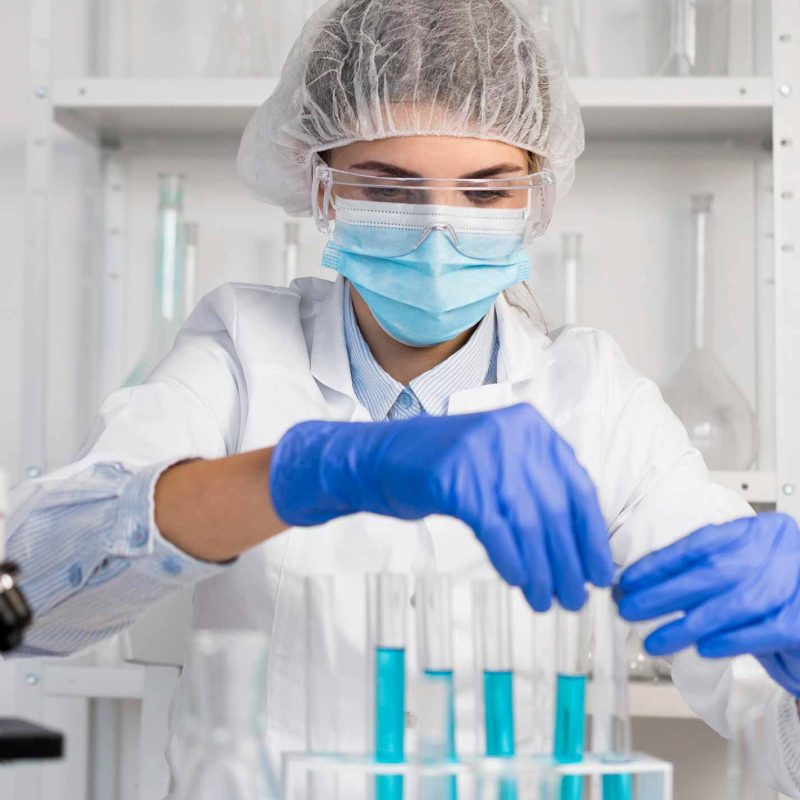
Foundations of Liquid Chromatography
Liquid chromatography (LC/HPLC) is an analytical method that enables the separation of substances in a mixture. In this process, analytes are distinguished from one another based on their specific interaction with the stationary phase and the mobile phase. This form of chromatography is used in numerous laboratory analysis applications and is particularly suitable for the precise analysis of complex samples. Modern systems utilize various detectors, specific solvents, and precisely coordinated components to ensure reproducible results. Liquid chromatography is especially suitable for non-volatile, thermally labile, or highly polar molecules.
Principle of chromatography with mobile and stationary phase
The mobile phase transports the mixture through the separation column, which is packed with a defined filling material that forms the stationary phase. Depending on the type, surface area, or polarity of the stationary phase, various interactions can occur with the individual components of the mixture to be separated. Different polarities of the molecules lead to variable retention times, which are the basis for quantitative and qualitative chromatographic evaluation.
Separation of substance mixtures via interactions and retention times
In the testing laboratory, the separation of a substance mixture occurs through adsorption, partition, or ion exchange processes. The resulting retention times serve to identify the analytes. To tailor the separation process to the specific nature of the inquiry, various parameters can be varied, such as the choice and composition of the eluent, flow rates, etc.
Differences to other chromatography methods
In contrast to gas chromatography, liquid chromatography (LC) is particularly suitable for non-volatile, thermally labile, or highly polar substances. Ion chromatography is a special case of liquid chromatography and is used for the determination of charged analytes, especially inorganic ions. Overall, the various methods within liquid chromatography cover a broader spectrum of analytes.
Structure and components of an LC system
A typical LC system in a testing laboratory usually includes a pump system, mixing chambers for eluents, automated sample injection (autosampler), a separation column, detectors, and a precise control and data evaluation unit. The choice of components influences the resolution, sensitivity, and robustness of the system.
Mobile Phase and Solvent Selection
The mobile phase – usually a mixture of organic solvents and water – influences the retention times and thus the separation of the analytes in the mixture through its elution effect. The selection of solvents for the mobile phase and the nature of their mixing is determined based on the physical properties of the expected analytes. The liquid composition depends significantly on the physicochemical properties of the analytes.
Stationary Phase, Column, and Column Material
Modern separation columns mostly use reversed-phase materials (e.g., C18), and more rarely normal-phase or HILIC. The column material (1.7–5 µm particles, core-shell or fully porous particles) determines efficiency and pressure behavior. The stationary phase defines the selectivity of the system.
Pump, Injection, and Detection
High-precision pumps ensure stable pressure and uniform flow rates. The injector transfers the sample into the system in a reproducible manner. For detection, UV and Diode Array Detectors (DAD), as well as mass spectrometers, are among the devices used.
High-Performance Liquid Chromatography (HPLC) and Ultra-High-Performance Liquid Chromatography (UHPLC)
This section focuses on physical particles and visible residues. Methods such as optical microscopy, FT-IR, or SEM-EDX enable the examination, classification, and analysis of particles. The data obtained help to assess material properties and optimize manufacturing processes.
Advantages of High-Performance Chromatography for Complex Analytes
HPLC achieves excellent separations in the case of complex analytes, particularly for products with many components, degradation products, or impurities. Thanks to its good methodological transferability combined with high reproducibility, HPLC has established itself as a standard technology for testing laboratories.
UHPLC for Fast Separations at High Pressure
UHPLC systems use smaller particle sizes for the stationary phases and thus achieve higher pressures at comparable flow rates, which is accompanied by an increase in separation performance. Due to the associated reduction in analysis times, this method is ideally suited for fast screening analyses in everyday laboratory work.
Influence of Pressure, Flow Rate, and Temperature on the Separation Process
Parameters such as pressure, flow rate, temperature, or solvent gradients significantly influence the interaction between analytes and the liquid mobile phase and thus the entire separation process. Optimal adjustment of these parameters during method development improves retention times and the quality of the analysis.
Detectors and Couplings in Liquid Chromatography
After successful separation, the individual components transported by the mobile phase must be recorded and detected after exiting the separation column. In liquid chromatography, various detectors are used for this purpose, depending on the nature of the substances. Of particular importance is the coupling of LC methods with mass spectrometry techniques such as LC-MS, HPLC-MS, or UHPLC-MS, as the combination of these techniques contributes significantly to structural elucidation and thus the identification of the analytes.
UV/Vis and DAD Detection for Quantitative Analysis
UV/VIS and DAD systems are highly suitable for determining molecules with quantifications of light-absorbing chromophores. Additionally, DAD provides spectral information for absorption characterization.
LC/HPLC/UPLC-MS with Mass Spectrometry for the Identification of Analytes
Through various ionization techniques, mass spectrometry provides structural information in addition to quantitative determination, depending on the type of analyte. In particular, ionization methods such as ESI or APCI significantly expand the range of analytical methods. This enables very precise conclusions about analytes, even in complex samples.
Applications of Liquid Chromatography in Testing Laboratories
Liquid chromatography is a central method for quality control, pollutant analysis, and materials testing. It is equally suitable for the analysis of pharmaceuticals, chemicals, food, and material samples, enabling precise separation and analysis of even complex substance mixtures, making it indispensable for routine laboratory work.
Analysis of Impurities and Residues in Products
Using liquid chromatography, even the smallest impurities and residues in chemical, pharmaceutical, or technical products can be detected. Through the combination with various detectors or MS coupling, even trace analytes can be reliably identified and quantified.
Quantitative Determination of Individual Components in Substance Mixtures
Complex substance mixtures can be reliably separated into their components and quantitatively determined using liquid chromatography. In addition to determining concentration, this precise measurement enables the evaluation of the composition and purity of samples.
Material and Materials Analysis with Chromatographic Methods
Liquid chromatography allows for the reliable identification and characterization of additives, plasticizers, and stabilizers based on their specific interactions with the column. This supports the assessment of material quality, product safety, and compliance with regulatory requirements. The method is equally suitable for both pharmaceutical and chemical LC analyses.
Evaluation, Detection, and Documentation of Results
The HPLC evaluation is essentially carried out using the retention times as well as the area integrals of the detected signals. In the case of LC-MS, additional information regarding the molecular or fragment masses of the detected analyte ions is provided, which, in an ideal case, enables precise structural assignment. Complete documentation ensures traceability, quality assurance, and verification of testing.
Qualitative vs. Quantitative LC Analyses
In liquid chromatography, qualitative analyses serve to identify analytes by comparing retention times with known reference substances. Quantitative analyses determine the exact concentration of components based on calibrations or internal standards.
Documentation of Results for Quality Assurance and Verification of Testing
All LC results are fully documented, including retention times and detector signals. This ensures the traceability of substances and fulfills the requirements for quality assurance and testing verification.
FAQ on Liquid Chromatography
What are the advantages of liquid chromatography (HPLC) compared to other separation methods for complex substance mixtures?
HPLC enables the separation of highly polar, thermally unstable, or non-volatile molecules that would not be analyzable in gas chromatography. Through various stationary and mobile phases, even complex substance mixtures can be separated with high resolution. Additionally, modern detectors and MS coupling provide very high sensitivity and unambiguous identification.
Which samples or matrices can be analyzed particularly well with HPLC/LC (liquids, extracts, product solutions)?
LC/HPLC is particularly suitable for liquids, extracts, product solutions, formulations, as well as matrices containing polymers or additives. Even complex samples such as food, chemicals, pharmaceutical solutions, or material surface extracts can be reliably separated and analyzed. Matrix effects can be minimized through appropriate sample preparation.
What detection limits are achievable with coupled HPLC-MS or UPLC-MS?
With HPLC-MS and especially UPLC-MS, detection limits in the low ppb to sub-ppb range are achievable, depending on the analytes, ionization sources, and matrix. Due to smaller particle sizes and sharper peaks, UHPLC systems additionally enable improved signal-to-noise ratios. This allows even trace impurities to be reliably detected.
When is it worthwhile to use different detectors (DAD, fluorescence detectors, mass spectrometers) in liquid chromatography?
DAD detectors are suitable for broadly applicable quantitative UV analyses. Fluorescence detectors offer maximum sensitivity for specific, strongly fluorescent substances. Mass spectrometers are ideal when unambiguous identification or structural information is required—especially for complex samples or unknown components.
How does the choice of the mobile phase and the solvent affect the duration of the analysis and the separation quality?
The composition of the mobile phase directly influences retention times, peak shapes, and selectivity. Polar or non-polar solvents, pH value, and gradient design significantly determine the analysis speed and separation power. An optimally coordinated mobile phase shortens run times while simultaneously improving resolution.
Can impurities or undesirable components in products be reliably identified using LC/HPLC?
Yes, LC/HPLC allows for the highly reliable identification of even the smallest impurities, especially in combination with DAD or MS detection. Retention times and characteristic detector signals serve as unique identification features. This enables even unknown or trace components to be reliably detected.
What requirements are there for sample preparation to ensure that the separation column and the column material are not damaged?
Particles, proteins, lipids, or polymer-containing components must be removed prior to injection through filtration, centrifugation, or solid-phase extraction. Additionally, only suitable solvents and pH ranges should be used to avoid damaging the column material. Clean sample preparation increases the lifespan of the separation column and ensures stable retention times.
For which industries and applications (e.g., plastics, chemical, manufacturing industries) is liquid chromatography typically used?
Liquid chromatography is widely used in the plastics, chemical, pharmaceutical, food, environmental, and manufacturing industries. It serves to analyze additives, stabilizers, residues, degradation products, or quality parameters in production processes. Material analytics and product qualification also benefit from the high selectivity of LC/HPLC.
What role does the determination of retention times play in the identification of analytes?
Retention times are a central identification feature in LC/HPLC. They reflect the interactions of an analyte with the mobile and stationary phases and enable the unambiguous assignment of peaks. In combination with detector signals or MS fragments, a robust identification system is created.
Do you also offer validated methods or methodological adaptations for customer-owned analytical systems?
Yes, both validated HPLC/LC methods can be provided, and customized adaptations for existing analytical systems can be developed. This includes optimizations of column material, mobile phase, detection, and sample preparation. In this way, systems can be specifically tailored to the respective products and requirements.
